
Willingboro City Directory Holdings
Verified Willingboro city directory material comes in fragments rather than one continuous shelf of commercial volumes. The clearest early source is the 1913 Farm Journal Farm Directory of Burlington County. At the other end is a 2019-20 cross-reference volume in the Willingboro Public Library catalog. The library also lists a county government directory, which is not a general resident roll. Treat the gaps between those items as gaps until a librarian or archive produces a title and year.
| Collection | Years | Where Held | Access |
|---|---|---|---|
| Farm Journal Farm Directory | 1913 | New Jersey State Library Digital Jerseyana | Free scan and OCR; Willingboro Township pages 209-211 |
| Burlington County cross reference directory | 2019-20 | Willingboro Public Library reference | Latest edition held; marked not for loan |
| Directory of the County of Burlington | Annual title; 1941 catalog description | Willingboro Public Library reference | Government office directory, not a general residents directory |
| Commercial or criss-cross city directories | No verified run | Ask WPL Local History and BCHS | Request a shelf inventory before relying on a claimed series |
That distinction matters. A Willingboro city directory is strongest when its volume, year, and collection are identified, not when a modern address is forced into an older source.
Willingboro’s 1913 Directory Record
The digitized Farm Journal volume is a rural household directory from before the planned-community era. The Willingboro Township material is on pages 209-211 and was published in Philadelphia by Wilmer Atkinson Company. It records people tied to farms, routes, and land, so it is a valuable historical city-directory clue but not a modern street list. Keep the exact surname, initials, route, and map code when moving to deeds, tax ratables, and census work.
The New Jersey State Library’s digitized 1913 Farm Directory preserves the source page used for Willingboro city directory research.
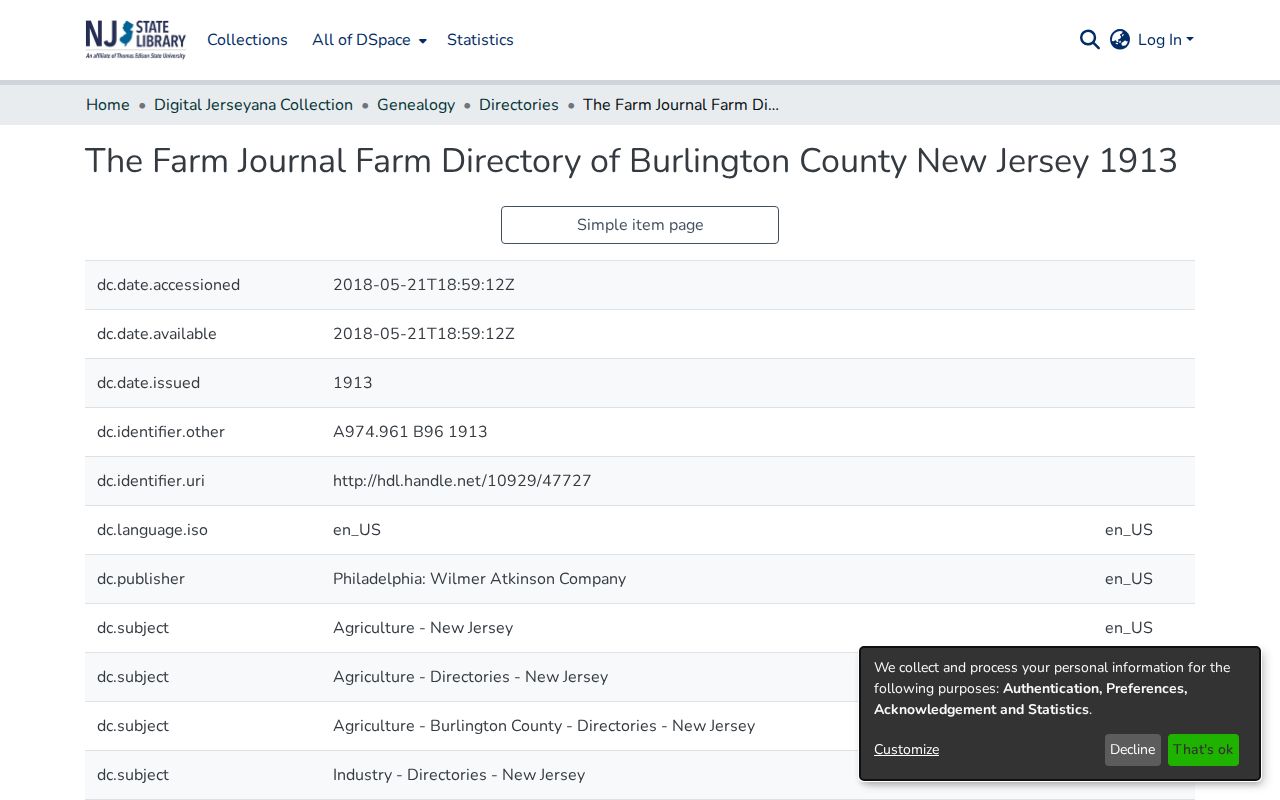
The scan makes the abbreviation key as important as the name line, because its short codes carry the route, map, land, and household context.
| Principal name | Surname and given name, often with useful initials. |
|---|---|
| Family notation | A spouse in parentheses and a child count may appear after the name. |
| Trade or calling | Brief work or craft description, useful for distinguishing like-named people. |
| Property marker | O, T, or WOS appears as a period status clue, not title proof. |
| Place clues | Acreage, crop terms, rural route, post office, Bell telephone notation, and an H road-map code. |
One printed example groups William G. Harrison, Clara L. Harrison, their children, a farm description, an ownership marker, acreage, Route 1 Burlington, and map code H10. Those details give several independent search terms without turning one entry into a conclusion.
Willingboro Directory Geography
Rural Route 1 and an H road code do not translate directly into a later Willingboro street address. The 1913 directory predates the Levitt acquisition and the boundary changes that reshaped the Township. Its route and post-office labels should be carried into historical maps, recorded deeds, tax ratables, and census material, then tested against the era. A route match alone does not establish parcel continuity.
Historical indexes also require name variants. The Township used Wellingborough in older material, became Levittown in 1959, and returned to Willingboro in 1963. Search the label that belongs to the date, and check older boundary descriptions before assigning an early record to the current Township.
Willingboro Local History Shelf
Willingboro Public Library is the local shelf-check route. Its local history room is at 220 Willingboro Parkway, and its staff can confirm whether a volume is in the room before a researcher treats it as a city directory. A focused request works best: ask for Willingboro or Levittown telephone books, reverse directories, yearly directories, school yearbooks, map keys, and municipal ephemera, then note the title and year returned.
The Township’s Willingboro Public Library page identifies the local-history room.
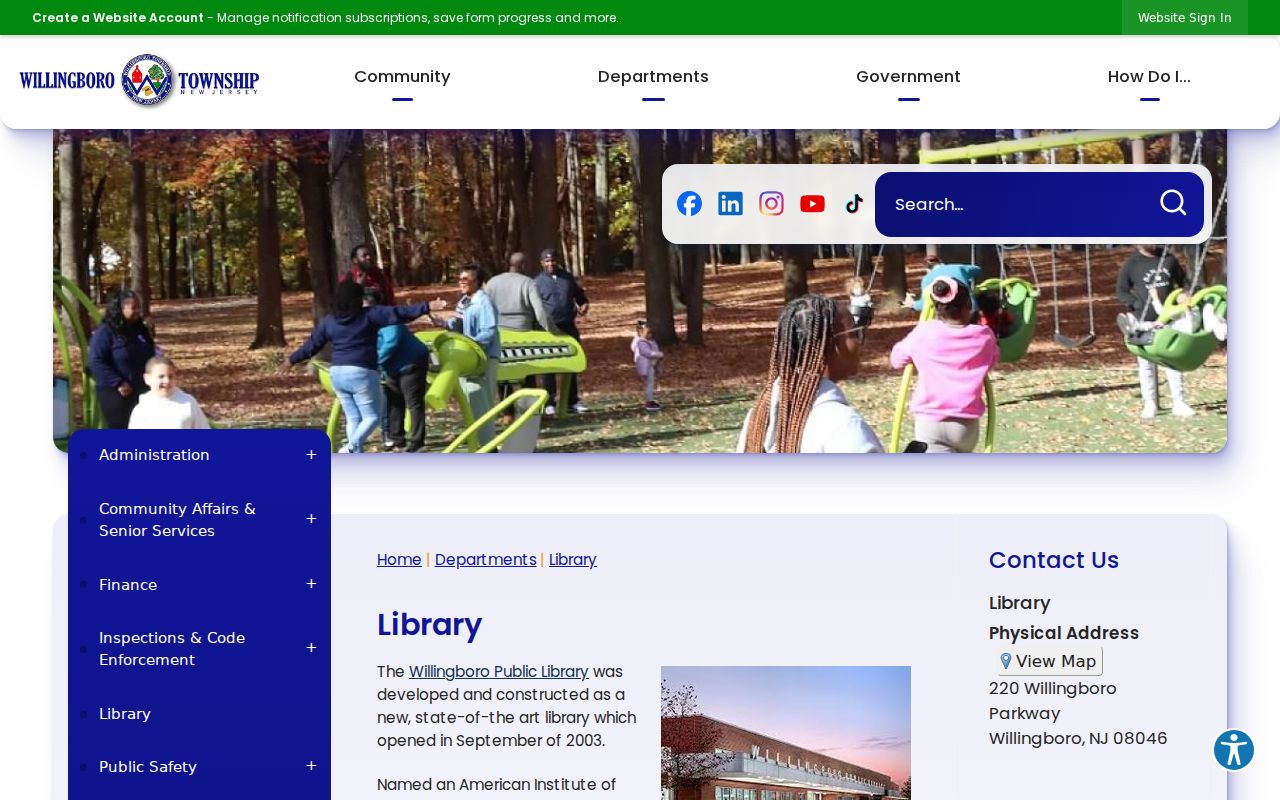
The room is a practical fallback when no online catalog record proves a particular directory run.
The Willingboro Public Library catalog is the next check for title, author, subject, and call-number searches.
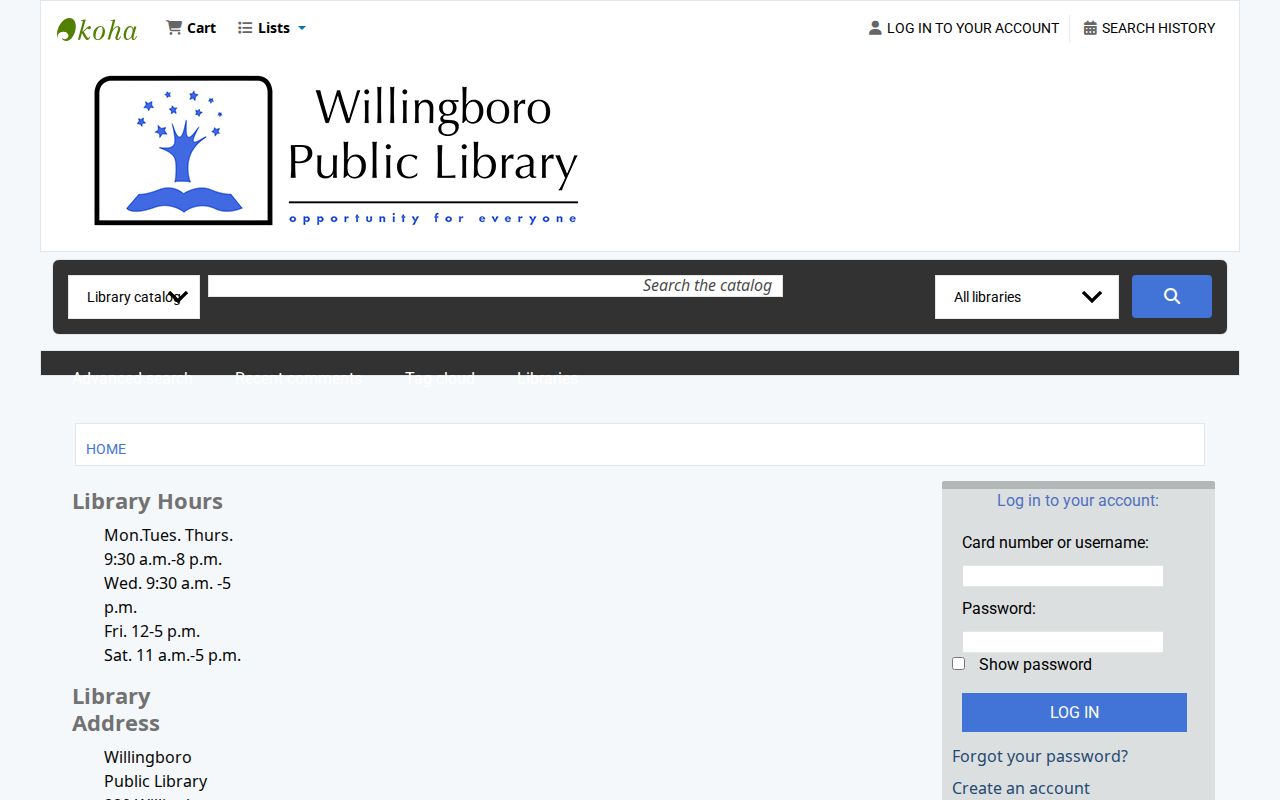
The catalog confirms a holding or a request path, while the physical volume supplies the year, edition, and printed abbreviation key.
WPL is also a FamilySearch affiliate location. Its published contact is 609-877-6668 and wipl@willingboro.org; some FamilySearch images may be available there even when access is restricted elsewhere.
Decoding a Willingboro Directory Entry
Read a city directory entry as a compact set of leads. First copy the name exactly, including initials. Then separate spouse, child-count, calling, property marker, route, and map code into separate notes. The printed key belongs with the entry because codes can change meaning from one volume to another. A cross-reference volume works differently: it is an address-to-name lead for its own recent edition, not a historical address record.
- Criss-cross directory
- A reverse arrangement that starts with an address rather than a surname. No verified Willingboro run was found, so confirm a volume before using that label.
- Householder index
- A list keyed to the person named for a household. It may omit other people connected to that address.
- Abbreviation key
- The volume’s own code list, usually near its opening matter. Photograph or transcribe it with the entry.
- Index variant
- An alternate town or family spelling that may be needed for a different historical era.
Use the item as a comparison tool. A name, route, and child count can support a later census or deed search, but none of those fields by itself proves identity.
Willingboro Cross-Reference Directory
The cataloged 2019-20 Burlington County cross reference directory, published by Marc Publishing, is WPL Adult Reference 910.25 BUR and is not for loan. It is useful as a recent address-to-name starting point, especially when an old document provides a street address. Its status is deliberately narrow: it does not establish a historic city-directory run and it does not establish a person’s current presence.
For a later historical record, use the exact name or address from that volume to locate a recorded instrument or a library-held source. Modern parcel and recorded-document work belongs with the separate Willingboro streets directory workflow.
Note: The 2019-20 cross-reference holding is a reference lead only, so confirm any address through the custodian and an independently dated record.
Willingboro Directory Companions
Burlington County sources extend the library trail without pretending to fill the missing commercial run. BCLS lists Local History and Genealogy resources, including in-library research tools and newspaper indexes. Willingboro is a non-participating municipality for ordinary free BCLS membership, so a paid in-person card may be needed for household access to some BCLS services. BurlCoHistory says its online material represents only part of the larger collection.
The BCLS Local History and Genealogy resource points to county-level research options.
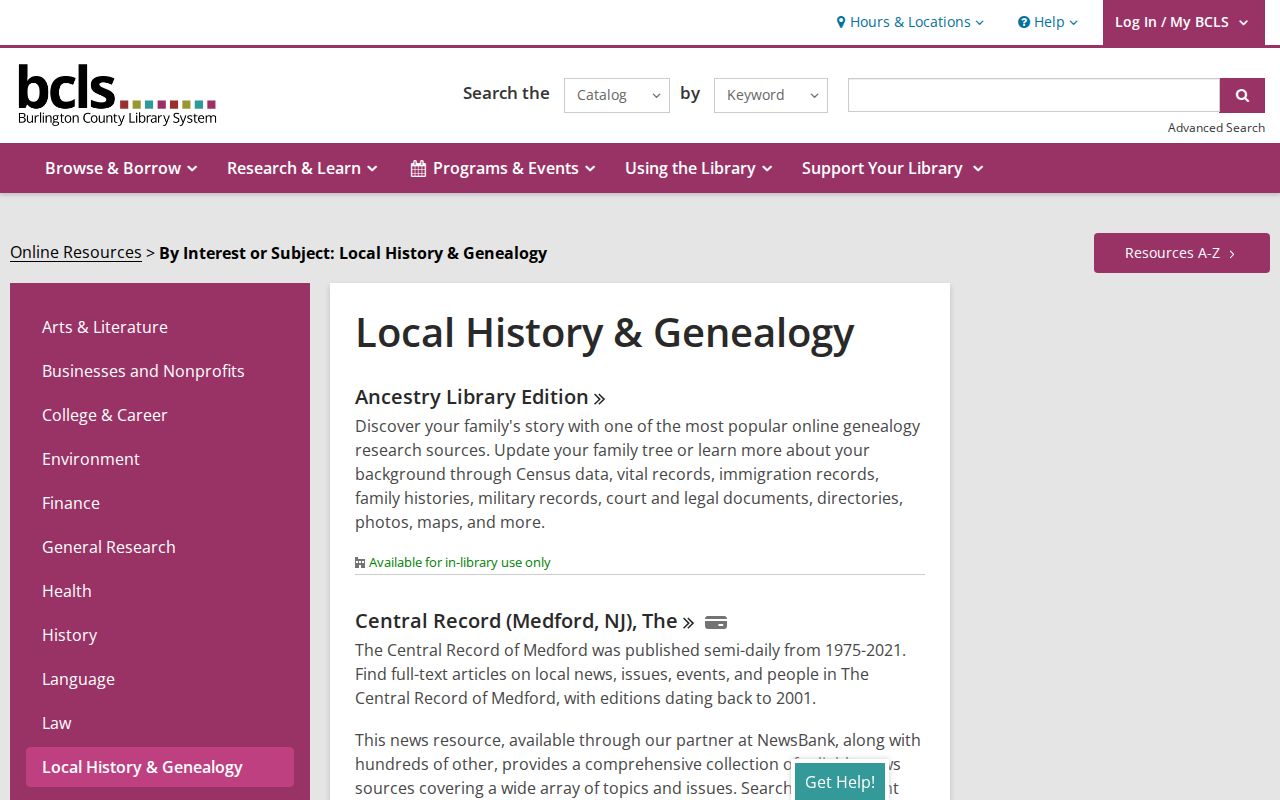
BCLS can connect an entry to newspaper citations, library databases, and the New Jersey Room rather than acting as a single city-directory database.
BurlCoHistory provides the digital-collections route and notes the Westampton New Jersey Room’s nearly 10,000 newspaper microfilm reels.
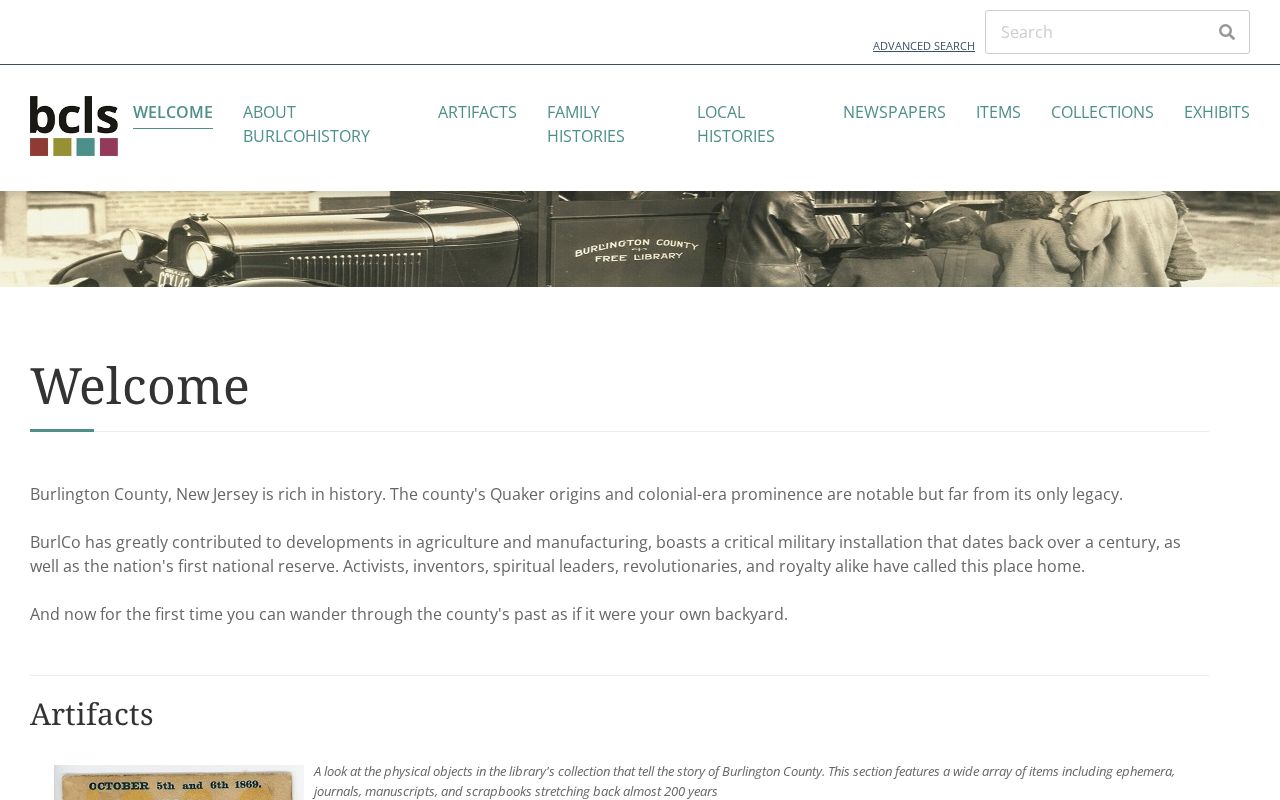
Its digital items are selective, so a missing online result is reason to ask about the physical collection, not proof that no source exists.
The Burlington County Historical Society collection adds maps, deeds, manuscripts, family files, photographs, and rare books.
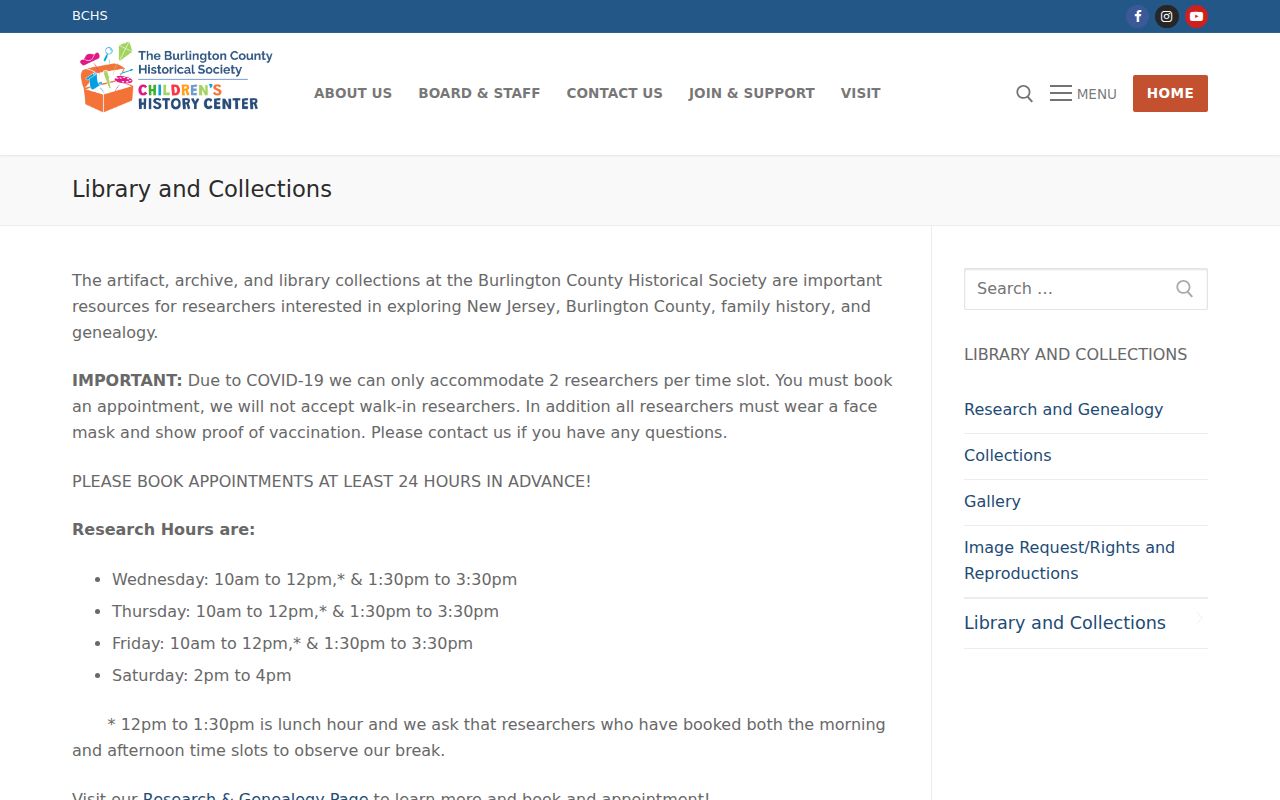
Call before relying on access details because parts of the Historical Society site retain appointment language.
Willingboro Directory Coverage Gaps
No official source reviewed here verifies a continuous commercial Willingboro or Levittown city-directory series, a continuous criss-cross run, or a published coverage span for either. That is an important research result. A claimed run needs a title page, a stated year, and a holding location before it can be treated as a source. The same caution applies to any assumed street listing from the years when the Township name or boundaries changed.
Compare the collections by era. PRESS covers recorded land records through three search periods, the County Clerk counter can address copy questions, the State Archives supplies older microfilm context, and the FamilySearch catalog lists county materials with its own access limits. Each source answers a different part of a household trail.
For early work, the State Archives also lists Burlington County deeds on microfilm through 1900 and other county genealogy holdings. Its catalog and research search can be used when the local shelf and county index end.
Trace Willingboro Directory Households
A household trail works best when each source is dated. Start with the first verified appearance, then track the printed name before deciding that two entries belong to the same family. The 1913 rural directory needs route and map clues, while later WPL material may use an address. Pair every directory clue with a record that has its own date, such as a census release, recorded deed, newspaper citation, or probate docket.
- Copy the directory name, initials, town label, route or address, and every printed code.
- Search the same spelling and variants, including Wellingborough, Levittown, or Willingboro when the year calls for them.
- Use the address, owner marker, or land clue to locate a dated deed or assessment record.
- Pair the household clue with the applicable public census release or a library yearbook.
- Use a newspaper citation or estate docket to test a disappearance, death, or family connection.
A missing name can mean several things: a move, a different spelling, a change in the source’s coverage, or no inclusion rule that year. The most useful conclusion is often a documented gap with the next custodian to contact.
Note: For an older source with no online hit, give the library, Clerk, or Archives the historical year and the town name printed in the source.